When it comes to interior painting projects inside a home, sometimes it helps to have an outside perspective. We have stepped into different situations and phases of home remodeling projects. It’s no secret that home improvement projects, especially full remodels, can be stressful for homeowners. Wearing multiple hats for a home project can get complicated and confusing.
When the troubles of a remodel become too heavy, our team is ready to step in and take the weight off of your shoulders. We want to see your interior painting project come to life and will walk you through all the steps to get there.
This post details how we tackled a basement painting project in a Colorado home. Learn what to consider before starting your project, including what increases the time and cost.
Identify Your Interior Painting Goals
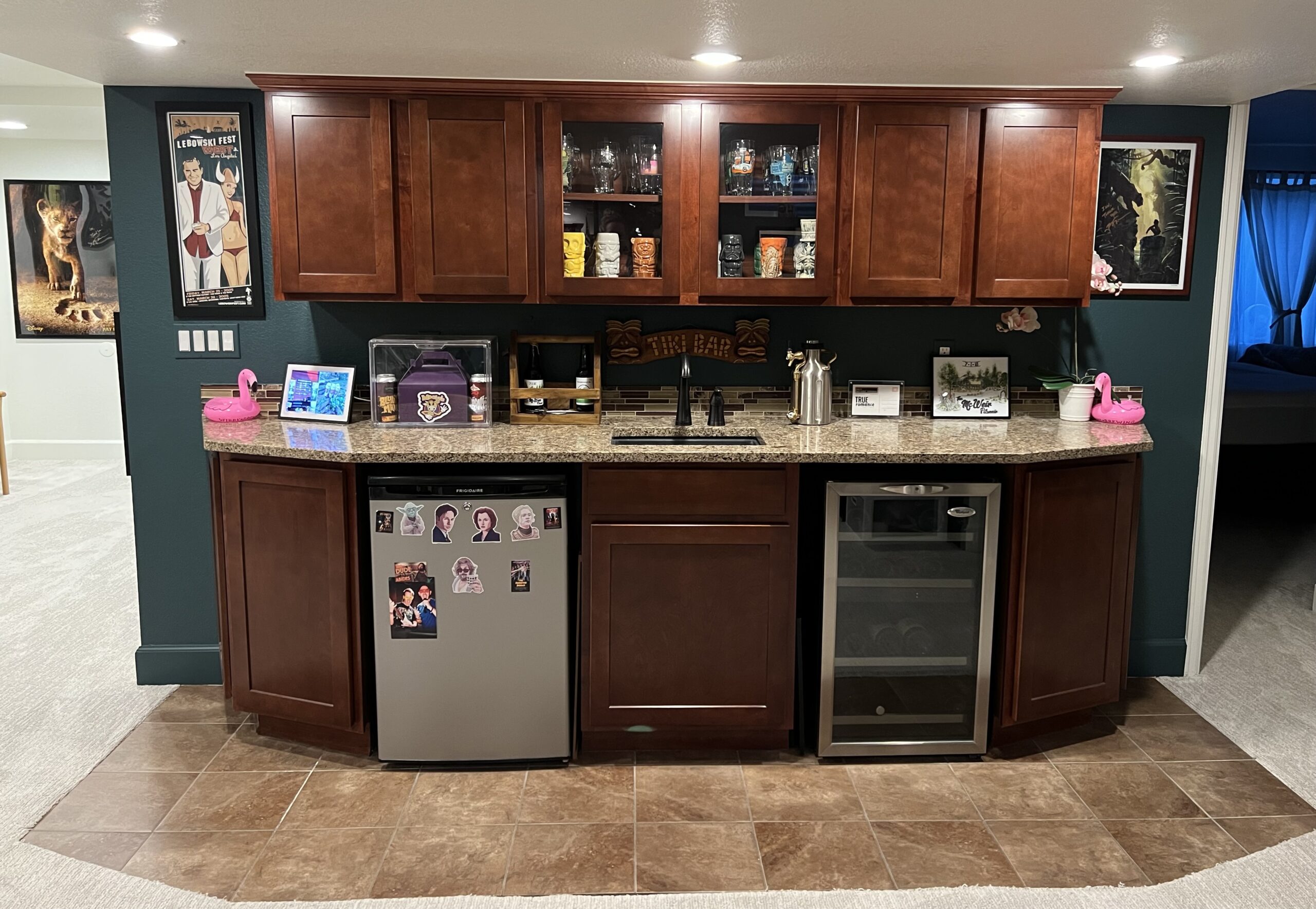
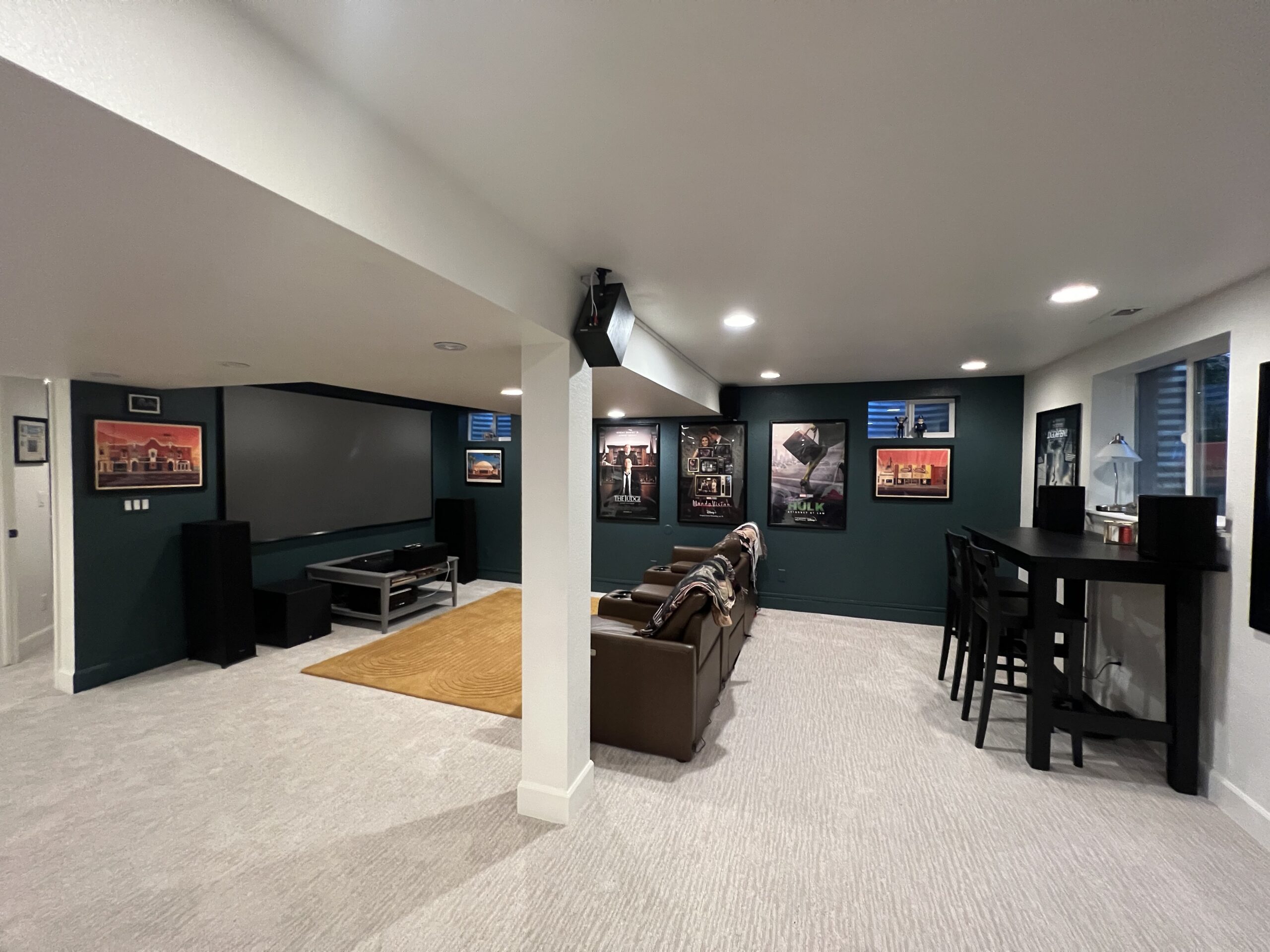
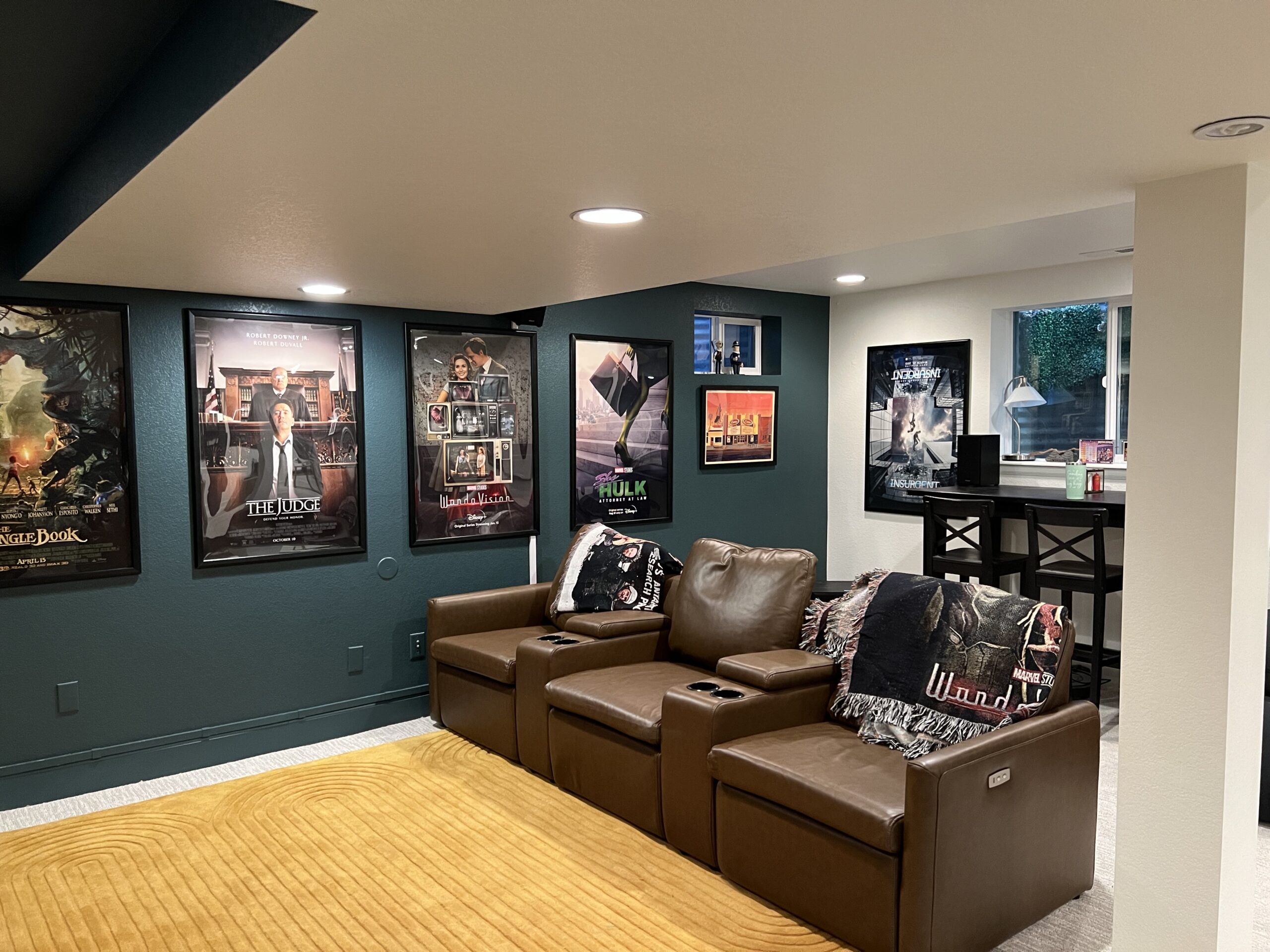
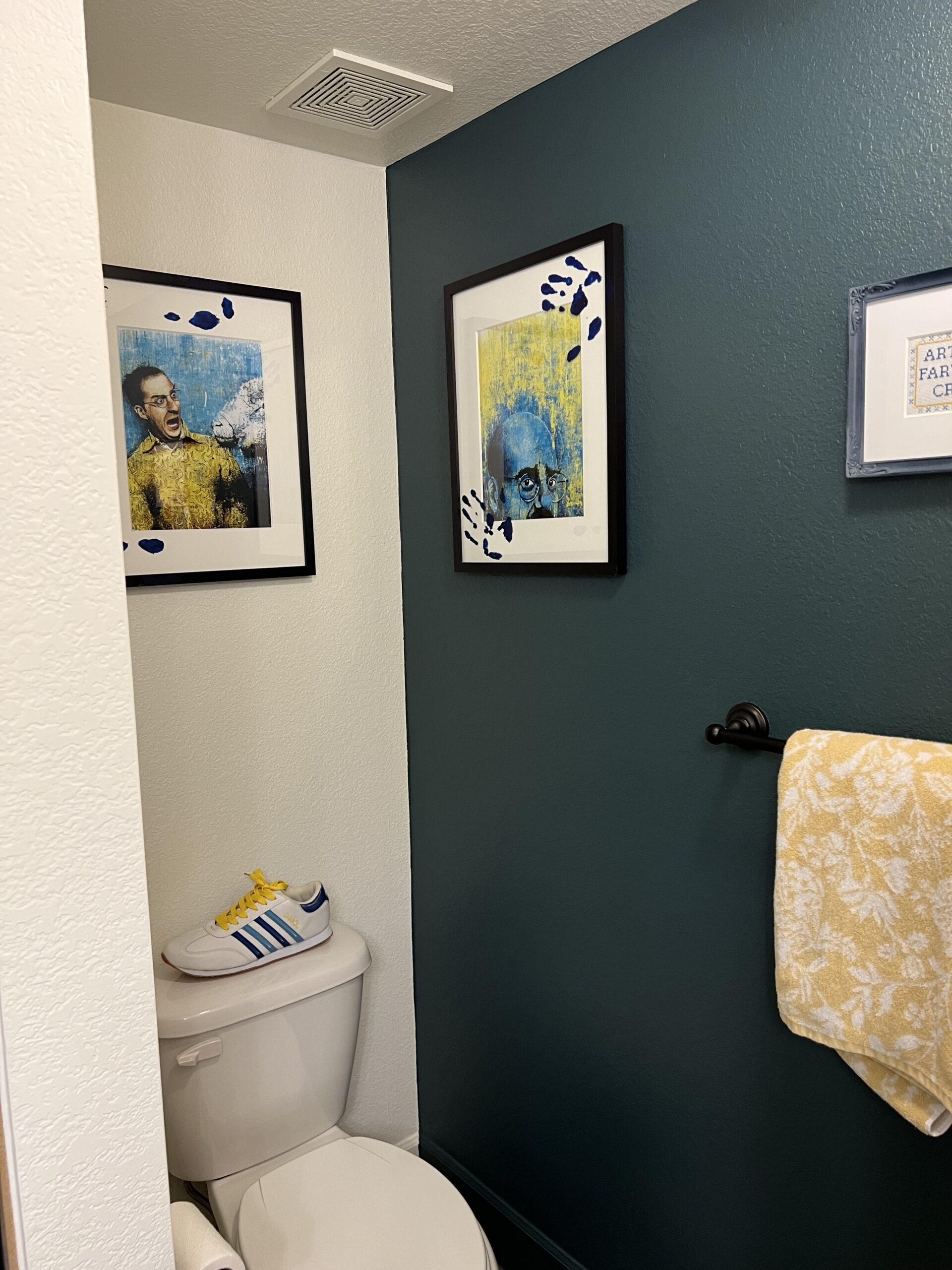
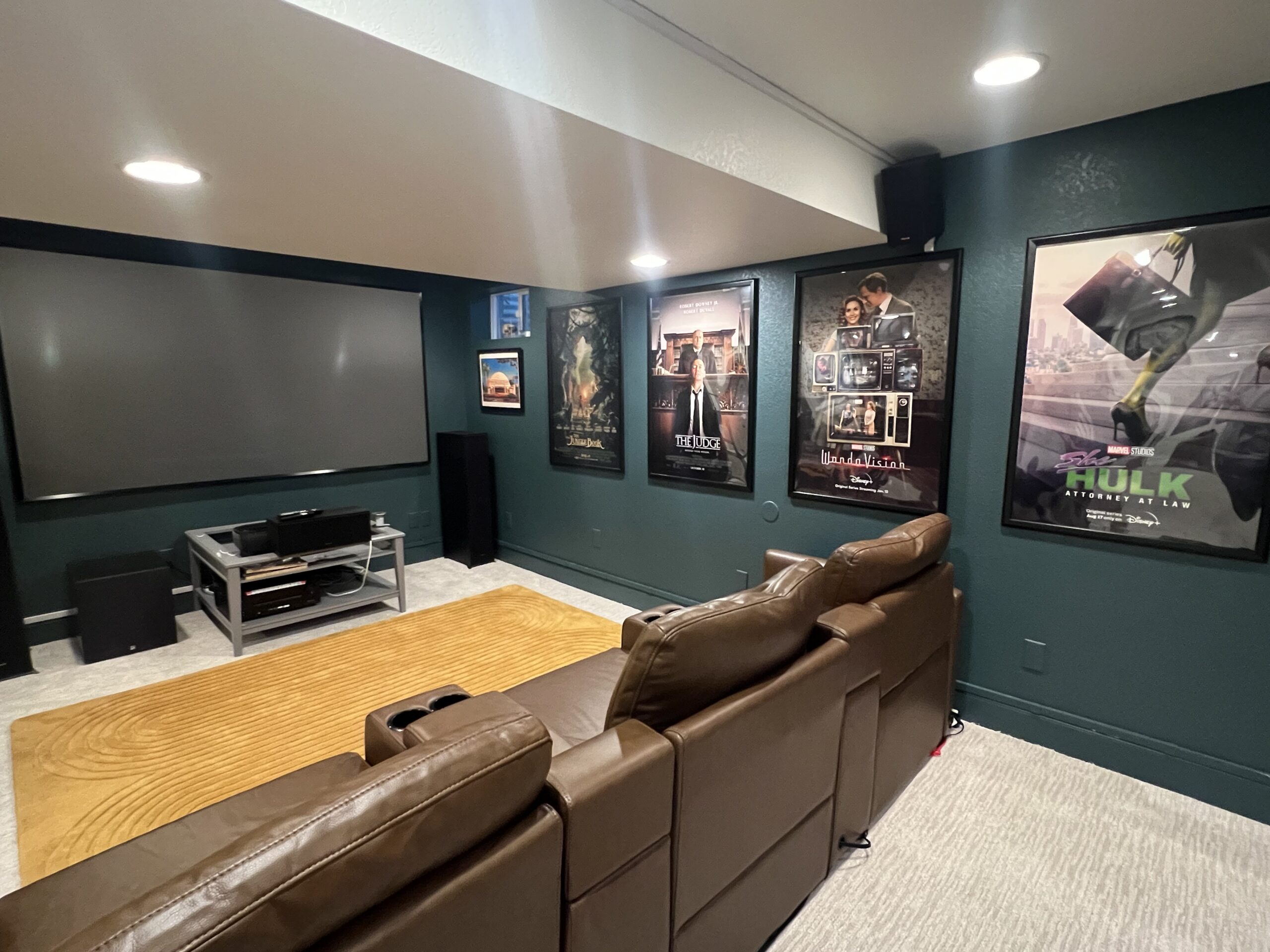
One of our most recent residential painting projects occurred in a basement with two bedrooms, one bath, a theatre, and a wet bar kitchen. The homeowner had previously dealt with a flood in their basement, so they needed to redo the entire space. We had already worked with this client on the exterior painting of their home and were honored to be chosen again for their basement revamp.
The first step of any painting project is to outline your expectations and vision for the space. Interior painting is a great way to improve and enhance a space. After a flood, this client was eager to erase the visible memories of the water damage. Their vision included keywords like quality, unique, monochromatic, and cozy. This was a great starting point, and we dove in a bit deeper with them on what those words meant in their minds for their space. We were able to dial in great ideas for bringing their basement back to life. We are always happy to provide recommendations for paint, sheen, and quality depending on your needs and future plans.
Define Your Budget and Brands
Every painting project involves a discussion of price versus cost. It’s important to consider that a higher price might be more cost-effective in the long run. Here’s an example from our basement painting project.
The homeowner chose Emerald paint from Sherwin Williams, their high-end paint option. Although it comes with a higher price point, this quality paint leaves a beautiful finish when painting walls, ceilings, doors, and baseboards. Emerald paint also rates well for durability. It was the right choice for this homeowner because it matched their vision for their basement.
While higher quality paint like Emerald does come at a higher price, when you break it down by the gallon you are only spending around $20 more than with a mid-level paint from Sherwin Williams. The price range of mid-level Super Paint is around $55 per gallon versus the high-end Emerald around $75 per gallon. These prices are based on our contractor’s discount, which we pass directly to you.
While these seem like expensive gallons of paint either way, the old saying “you get what you pay for” is true when it comes to paint. That’s why we always recommend Sherwin Williams paint in general; it will give a high-quality result. If you choose a cheaper paint product from another company, the cost will be higher in the long run. In other words, you will end up paying more over time by choosing low-quality paint that will need touch-ups, doesn’t clean well, or doesn’t cover well.
Another factor of price versus cost involves using quality caulking. Anytime a property owner or manager wants to paint walls, baseboards, and trim, we always recommend caulking the tops of baseboards, around doorjambs, and any areas where the paint will overlap trim areas. Caulking these areas provides a pleasing look and professional finish. It’s the same as choosing a higher quality and higher price point paint. Yes, caulking these areas may require extra labor and materials. Still, it is worth it over a longer period of time.
There are many different caulking options available. We almost always use a caulk from Sherwin Williams that contains silicone. The silicone provides more flexibility and durability than other brands’ lower quality caulk. Sherwin Williams also has a lower quality caulk option without silicone, but for roughly one dollar more a tube we would always recommend going with the better quality caulk for a nicer looking result and longer lasting product. Higher quality caulk takes a much longer time to lose integrity. It will not crack even with the house’s settling or activity inside.
Choose the Paint Colors That Fit Your Vision
Now comes the fun part: choosing your paint colors. It is important to take time to discuss and look at different color options for your space. You are making an investment in your property that costs time and money. Taking the time upfront to sample different colors on the walls is well worth it and reduces the chances of choosing the wrong color.
We recommend getting actual paint samples and trying them out in different areas around your home. Do not decide on paint merely by taping small paint swatches to your walls. There will be slight differences in colors and tones when the paint is applied to a whole wall compared to the paint swatch cards. Additionally, seeing the paint covering a larger area than a couple of inches gives you more of a chance to view it in your home’s lighting.
So many color options are available now, and each has undertones that can look different in different spaces. Just because a color looks one way on a specific wall doesn’t mean the color will look the same throughout the entire space being painted. A few factors that can change how a color looks are direct and indirect sunlight, artificial lighting, and types and color spectrums of bulbs. Consider all these factors in the space you are painting, obtain some paint samples, and cover different areas of your space to test it out. Then, you are ready to make a decision on colors.
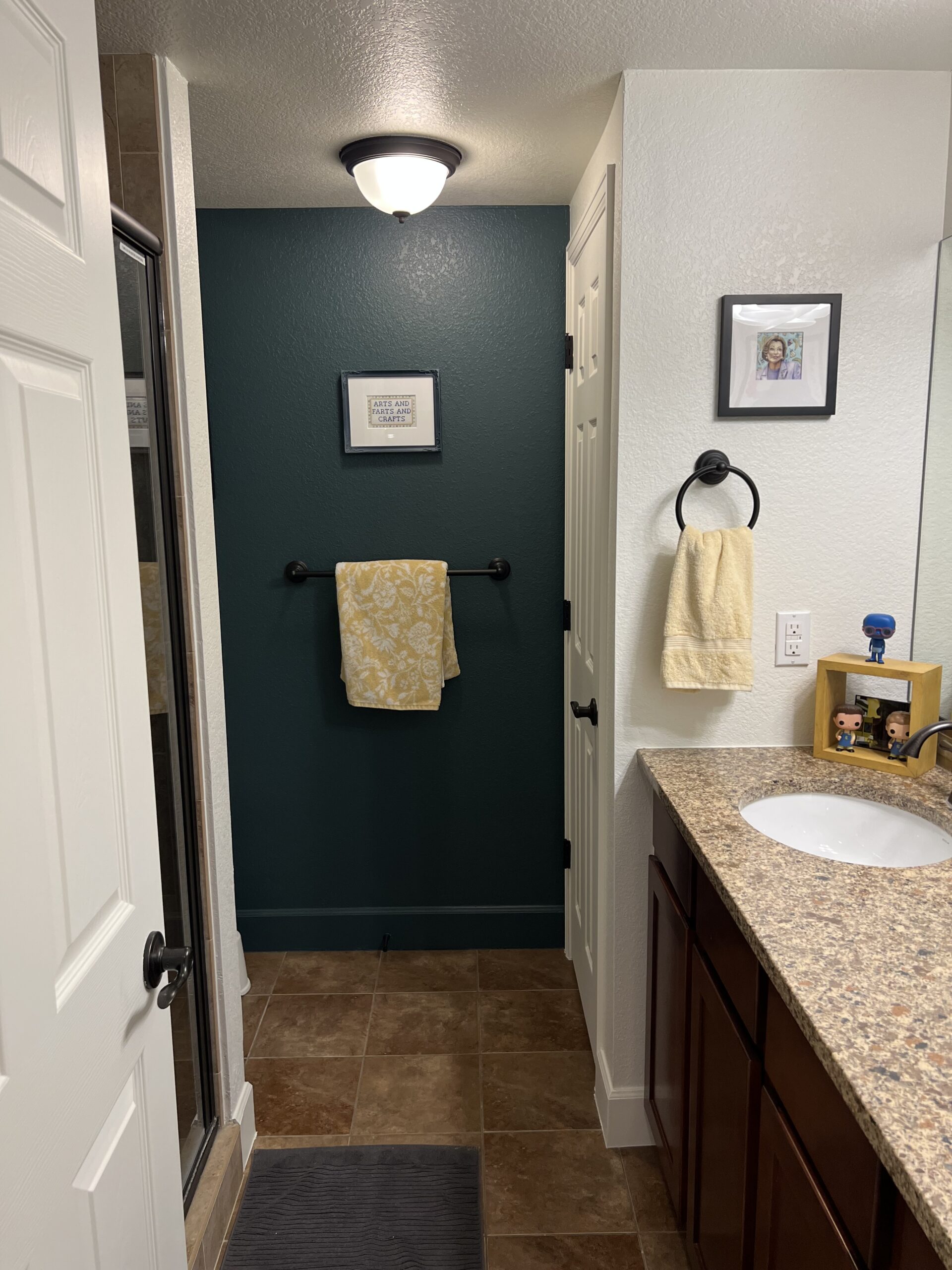
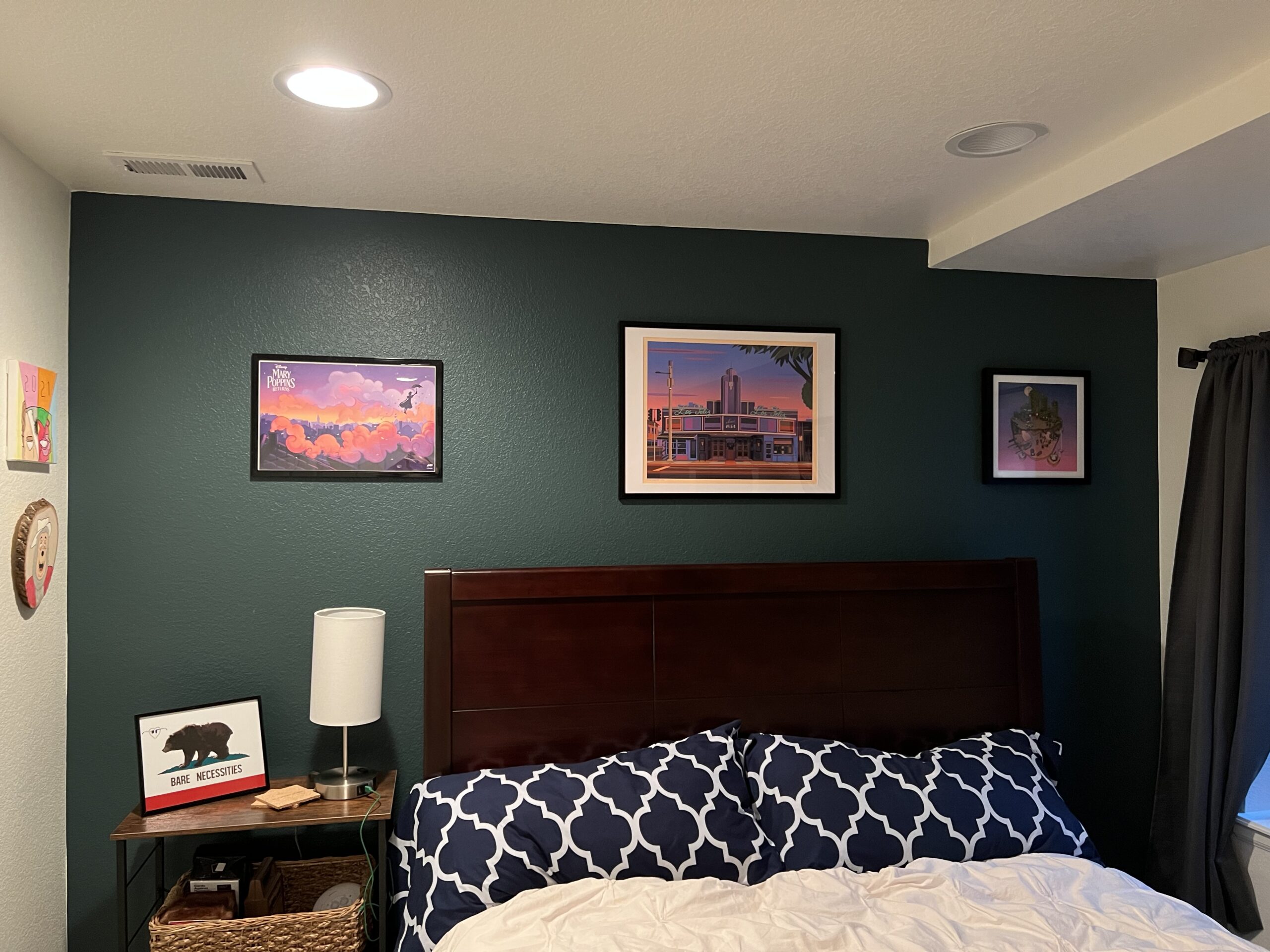
As mentioned, this client desired a monochromatic color scheme for their basement. Monochromatic painting is using one color for all the areas of the space. Often, when doing interior painting, there are different colors and sheens for different areas of the home, but a monochromatic painting scheme means the entire space is one color or hue. The walls, ceiling, trim, and doors were painted the same color (crème) to stick with the monochromatic theme. They chose a darker accent in a green hue for the theatre area and bedrooms. This helped create a unique and cozy feel in the entire space.
Establish Clear Communication with Your Painting Contractor
Your vision is the key to the whole project. We want to help you achieve your final vision for your space, and painting is usually the first step. Plan to spend a little time with your painting contractor just discussing your ideas, asking questions, and reviewing different options. We are happy to give recommendations based on past interior and exterior painting projects to help you bring your project to fruition.
Naturally, communication goes both ways. For each project, we measure the square feet of all surface areas to be painted. This helps us calculate the amount of paint and labor needed to complete the project. Depending on the paint quality and specifics for painting the area, the price per square foot can increase or decrease. For example, high-end paint, accent walls, and prep for newly installed trim and doors can increase the cost. We will communicate every part of the cost of the project to you up front.
We set a high standard for every painting project we have the opportunity to work on. For us, this is more than just slapping paint on walls. It comes down to giving each client the best property transformation possible. That involves prior planning, great communication, providing our expertise, detailed prep work, and continued education on new and best practices.
As for our basement project, working with our client for the second time in their beautiful house was a pleasure. The homeowners have had a long journey of remodeling their basement, and we were glad to take part in that and alleviate some stress. They were pleased with the outcome and left us a 5-star review for the transformation.